

Whether you’re brewing a cup of tea, preparing a glass of squash, or simply quenching your thirst with good old H2O, you may well go straight to the tap. But what if we told you there was a way to enjoy all of the goodness of water without any of the impurities that come from the UK’s water supply?
Enter filtered water bottles — the quick and easy solution for pure, healthy hydration at home and on the go so you know exactly what’s going into your water.
What is tap water?
Many of us may take tap water for granted. And indeed, we’re lucky to have one of the safest and most effective national water supplies in the world. However, it’s important to know exactly how tap water is processed so you can make informed decisions on the hydration you take in.
Is tap water filtered?
In the UK, tap water does go through several filters to make sure it’s safe to drink. It’s also treated with UV light and chlorine to disinfect it. However, the filtration process of tap water is very different to the purification of our filtered water bottles.
What’s in tap water?
Before reaching our homes, tap water is treated to get rid of any harmful pathogens, including E. coli. However, it still contains a range of minerals that not everyone wants to drink. Some of these are naturally occurring, and others are added deliberately by water companies.
So, what could be lurking in your taps?
- Firstly, there’s limescale, which is formed by magnesium and calcium carbonate — it’s the chalky deposit that makes cleaning your taps a nightmare and can give your cuppa some unwanted gritty flakes.
- Although rare, it’s not impossible for lead to infiltrate your water supply, too. In the past, homes were built with lead pipes before we knew it was a potentially dangerous material. Sometimes, lead from old pipes can leach into a home’s water supply — which is not ideal.
- Microplastics are everywhere — unfortunately, that could include in your humble kitchen tap. Synthetic clothing fibres, paint, tyres, and more contain tiny pieces of plastic that wash away into our drains and waterways.
- Did you know that trace pharmaceuticals could be in your water system? From SSRIs to compounds found in the contraceptive pill, some drugs are processed through the human body and end up in the water systems.
- Although the UK’s tap water supplies are tested very carefully for bacteria and diseases, occasional outbreaks can occur.
How chlorine and fluoride impact your drinking water
As mentioned, tap water is also treated with chlorine. This chemical is used to disinfect water before it heads over to our kitchens. If you’ve ever been swimming and noticed how long the chlorine smell lingers on your swimwear, you’ll know this is a rather strong chemical.
Although it’s there for a good cause — to kill harmful bacteria — chlorine can leave your tap water with an unpleasant taste.
Fluoride is another common addition to water supplies. It has been added to some UK water systems since the 1960s as a way to improve the nation’s dental health. It’s the same mineral found in your toothpaste to help keep cavities and decay at bay. However, the compound is somewhat controversial, as ingesting too much is thought to be harmful.
Signs you need a water filter at home
A tap water filter can be a great way to get more from your hydration. If you notice any of the following, you could benefit from a tap water filter.
- An unpleasant taste: The taste of water varies wherever you go, and some people find that their local water supply has a less-than-pleasant flavour. It might have a bitter or metallic edge, or you might notice a hint of chlorine. A filter can sort that right out!
- A strange colour: Is your tap water cloudy or tinged with a yellow shade? Although, in most cases, this won’t mean there’s anything unsafe in your water, it’s best to get it checked by your water company. If they say your water is safe to drink, you can still consider a water filter to make it more pleasant to sip.
- Lots of limescale: If you’re in a hard-water area, that being an area with high mineral content in its water, you might find you get a lot of limescale buildup in your sink, around your taps, and in your kettle. A water filter can help soften your water by removing the excess calcium and magnesium mineral deposits.

What is filtered water?
While tap water does go through filtration systems, we wouldn’t say it counts as ‘filtered water’. Filtered water is processed through much finer filters to get the purest hydration.
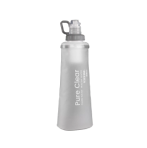
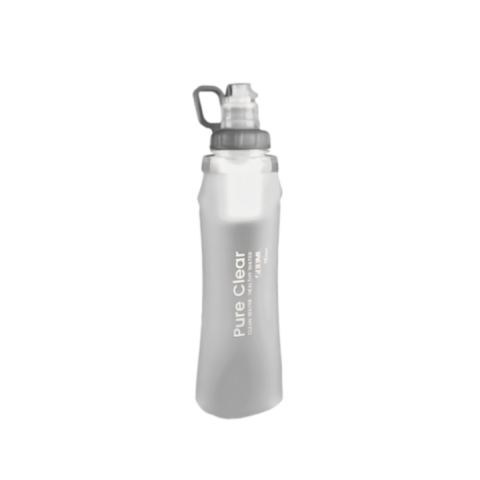
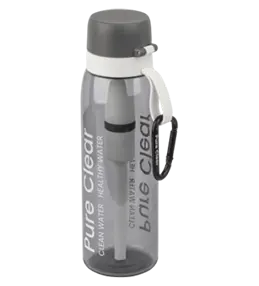
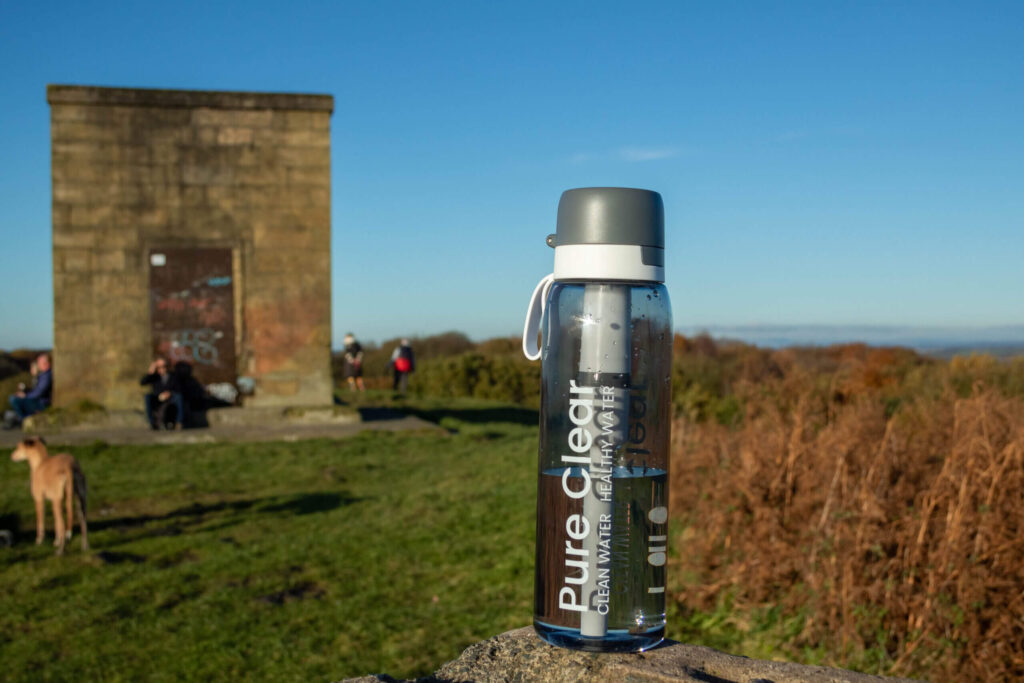
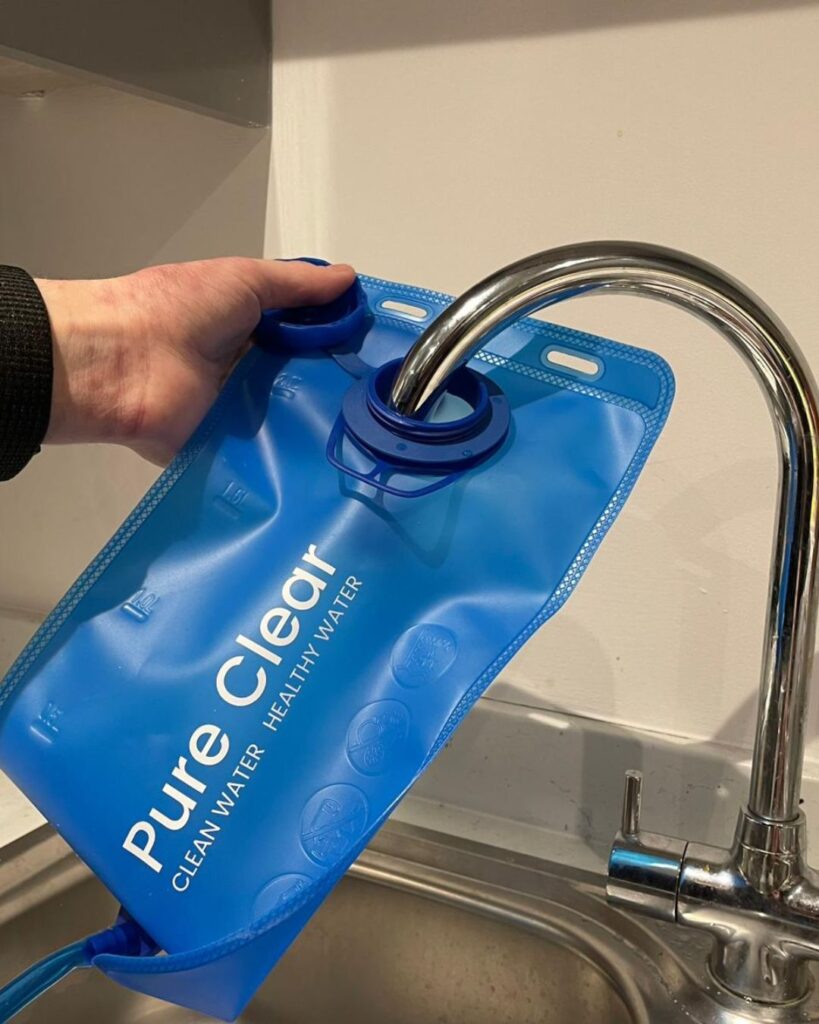
One of the easiest ways to benefit from filtered tap water is to get one of our filtered water bottles. Simply fill your bottle up directly from your tap and let the Pure Clear filters work their magic.
What is removed from filtered water?
Filtered water is free from all those pesky contaminants we talked about above. The filters remove chlorine and other chemicals to ensure there are no heavy metal traces in your water and reduce the amount of limescale.
Which one should you use?
It’s worth noting that not all water filters are made equal. A lot of the most common UF (Ultra Filtration) filters do a good job of getting some of the main contaminants, but they don’t catch everything.
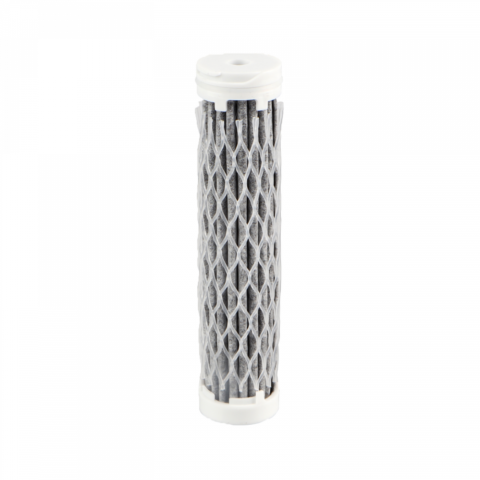
That’s why we developed our unique Pure Clear filtration system. Our filters use electroadsorptive filter technology to provide greater protection against waterborne nasties.
These filters use a positive electrical charge to attract pollutants, which then go through incredibly tiny pores. Combined with activated carbon, these help remove what other water filters can’t.
Pure Clear filters get rid of key contaminants like chlorine, microplastics, and bacteria, but they also tackle:
- Viruses
- Endotoxins (the toxins in bacteria cell walls)
- Colloids (micro particles of all manner of materials)
- Trace pharmaceuticals
- Chemical reduction
- And more
Enjoy pure, filtered tap water at home
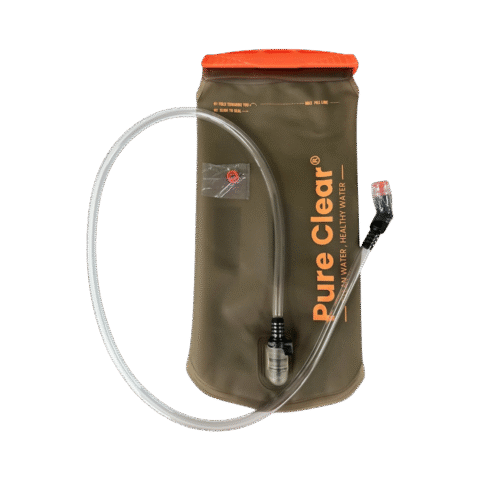
Our filtered water bottles are super convenient and easy to use, meaning you can enjoy purer tap water at home or fill up for when you’re on the go. We have 500ml and 1L capacity bottles and 2L hydration bladders for when you’re out and about.
Our filters are incredibly effective, allowing you to enjoy purer, healthier, and tastier water. Take a look at our range and learn more about the health benefits of filtered water in our guide.